
Environmental and Social Commitment Plan (ESCP)
Federal Ministry of Health & Human Services
Improving Healthcare Services in Somalia Project “Damal Caafimaad” (P178876)
Public Dissemination Summary for the Additional Financing (AF4)
Environmental Social Commitment Plan (ESCP)
May 2026
The Environmental and Social Commitment Plan (ESCP) for the Fourth Additional Financing of the Damal Caafimaad Project sets out the Government of Somalia’s commitments to manage environmental, social, health, safety, and security risks during project implementation. The ESCP applies to the original project and all additional financings and requires the project to comply with the World Bank Environmental and Social Standards.
The ESCP confirms that the Ministry of Health, through the PCIU and Federal Member State PMTs, will maintain qualified environmental, social, GBV, and security specialists to support risk management. Implementing partners and contractors are also required to maintain adequate E&S capacity and apply the project’s environmental and social requirements throughout implementation.
The project will continue to implement key E&S instruments, including the ESMF, ESMPs/C-ESMPs, Infection Control and Waste Management Plans, Labor Management Procedures, Security Management Plans, GBV/SEA-SH Action Plan, and Stakeholder Engagement Plan. These instruments will guide waste management, occupational health and safety, community health and safety, security, stakeholder engagement, and prevention of sexual exploitation and abuse/sexual harassment.
The ESCP also requires regular monitoring and reporting. The PCIU will submit quarterly E&S performance reports to the World Bank, while PMTs and implementing partners will provide regular updates on ESMP implementation, grievances, incidents, contractor performance, stakeholder engagement, and corrective actions. Serious incidents, including SEA/SH and security incidents, must be reported within 24 hours, followed by review and corrective action.
The project will maintain an accessible grievance mechanism for communities, workers, and project-affected people. This mechanism will allow complaints to be submitted safely, confidentially, and without retaliation, including anonymous complaints and SEA/SH-related concerns. The updated ESCP and related E&S documents will be disclosed publicly to ensure transparency, accountability, and continued stakeholder participation throughout project implementation.PUBLICATION
Summary Updated Stakeholder Engagement Plan for Fourth Additional Financing (AF4)
Improving Healthcare Services in Somalia Project “Damal Caafimaad” (P178876)
Federal Ministry of Health & Human Services — April 2026
The Federal Ministry of Health & Human Services has updated the Stakeholder Engagement Plan (SEP) for the Damal Caafimaad Project to reflect the Fourth Additional Financing (AF4). The SEP explains how the Ministry, through the Project Coordination and Implementation Unit (PCIU), Federal Member State Project Management Teams (PMTs), and implementing partners, will engage communities, beneficiaries, health workers, government institutions, civil society, private providers, and other stakeholders during project implementation. The updated SEP covers the parent project and Additional Financing 1, 2, 3, and 4 interventions.
Damal Caafimaad aims to improve coverage of essential health and nutrition services in selected project areas and strengthen the stewardship capacity of Ministries of Health. The Fourth Additional Financing of US$15 million will support Somalia’s response to the drought-induced humanitarian crisis by financing essential nutrition, immunization, and emergency health supplies. These include Ready-to-Use Therapeutic Food, therapeutic milk, small-quantity lipid-based nutrient supplements, vaccines, and emergency health commodities for children under five and other vulnerable populations in affected districts.
The purpose of the updated SEP is to ensure transparent, inclusive, and continuous engagement with all relevant stakeholders. The SEP also supports compliance with the World Bank Environmental and Social Framework, especially requirements on stakeholder engagement, inclusion, information disclosure, grievance management, labor and community health and safety, and protection from SEA/SH risks. The SEP identifies key stakeholder groups, including project-affected communities, children under five suffering from malnutrition, pregnant and lactating women, caregivers, internally displaced persons, drought-affected communities, health workers, private health providers, community leaders, religious leaders, clan elders, women, youth, minority groups, persons with disabilities, contractors, field staffs of UN agencies, civil society organizations, and government institutions.
The updated SEP includes an Inclusion Plan to ensure meaningful participation of disadvantaged and vulnerable groups. This includes targeted engagement with women, youth, persons with disabilities, IDPs, minority groups, nomadic communities, pregnant and lactating women, caregivers, and drought-affected households. The project will make efforts to ensure that these groups receive accessible information, can participate safely in consultations, and can raise concerns without fear of retaliation or discrimination.
Environmental and Social Management Plans (ESMPs) for Six Regional Hospitals
- 1. Forlanini Regional Hospital – Phase 2: Construction Works Benadir Regional Administration (BRA)
- 2. Bay Baidoa Regional Hospital – Baidoa South West State, Rehabilitation works
- 3. Galgadug Regional Hospital: Rehabilitation Works - Galmudug State
- 4. Jowhar Regional Hospital: Rehabilitation Works
- 5. Rehabilitation of Kismayo Regional Hospital – Jubaland
- 6. Bosaso Regional Hospital Construction Works Puntland
Labour Management Procedures (LMP)
Revised: December 2025
The updated LMP outlines the project’s approach to managing labor and working conditions across all categories of project workers—including direct workers, contracted workers, primary suppliers, and implementing partners.
It incorporates:
- Revised labor risk assessment covering AF3 construction and rehabilitation works
- Strengthened Occupational Health and Safety (OHS) measures
- Updated provisions on GBV/SEA-SH prevention and response
- Grievance Mechanism (GM) for Project Workers
- Age verification procedures and prohibition of child/forced labor
- Contractor management requirements aligned with ESS2
The LMP has now been finalized and disclosed in accordance with the World Bank’s ESS2 and national labor legislation.
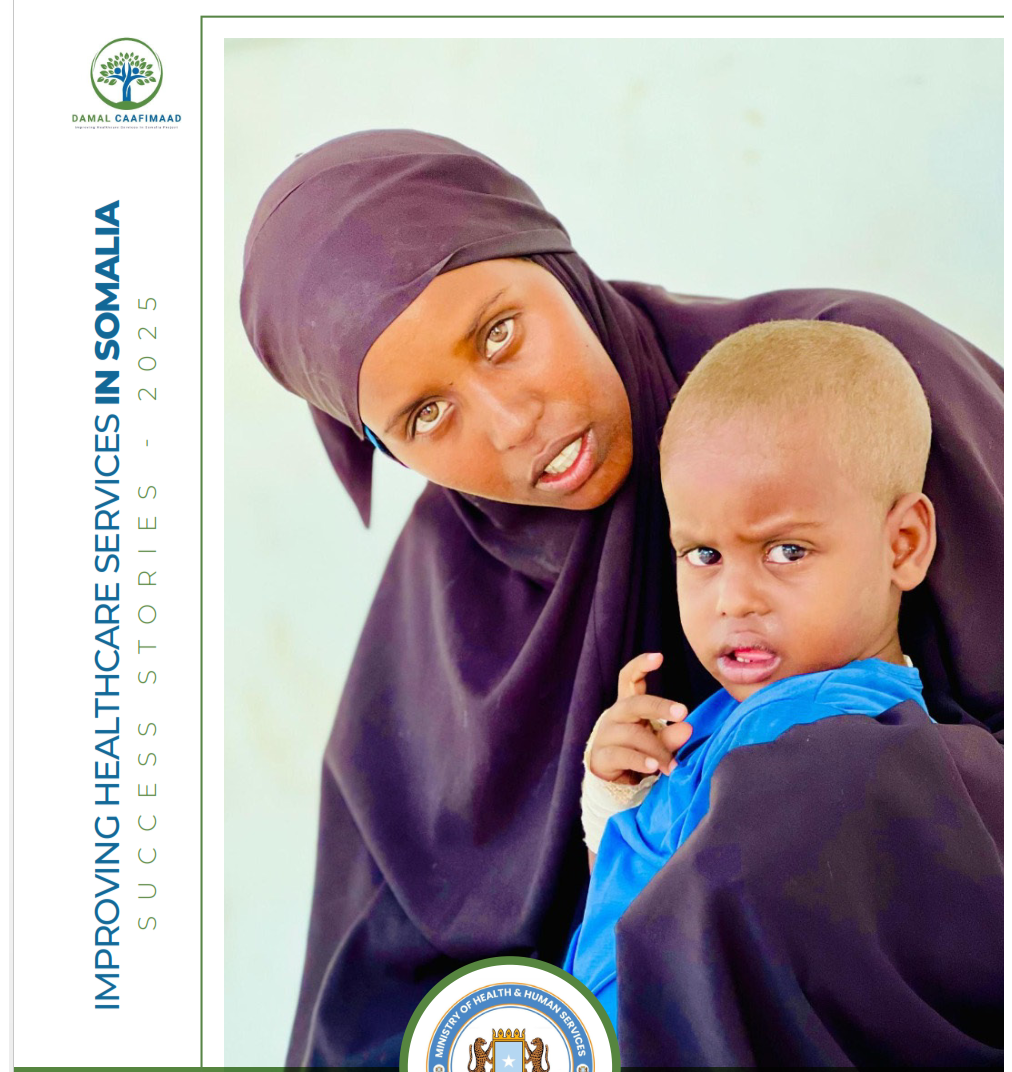
The Damal Caafimaad Project (Improving Healthcare Services in Somalia)
The Damal Caafimaad Project (Improving Healthcare Services in Somalia) is a flagship health project led by the Federal Government of Somalia and supported by the World Bank with its main focus being improving access to essential health and nutrition services in line with the Essential Package of Health Services (EPHS) Framework.
This report captures the success stories and impact from the project during the July–September 2025 reporting period. It highlights the project’s contribution to expanding the EPHS and strengthening Somalia’s health system to improve access to essential and life-saving health and nutrition services. The stories reflect the collective effort and collaboration between the Federal and State Ministries of Health and implementing partners in delivering tangible results that are improving lives and communities
Environmental and Social Management Framework (ESMF) – Damal Caafimaad Project
The Federal Ministry of Health, through the Project Coordination and Implementation Unit (PCIU), has updated the Environmental and Social Management Framework (ESMF) for the Improving Healthcare Services in Somalia (Damal Caafimaad) Project to reflect the new Additional Financing (AF) activities. The updated ESMF now covers: (i) AF2 Family Planning (FP) scale-up, which expands reproductive health services related measures. The document outlines potential environmental and social risks, such as healthcare waste generation, occupational health and safety, pollution prevention, and community health, and provides mitigation measures aligned with the World Bank Environmental and Social Standards (ESS1–ESS10). It also clarifies institutional roles, capacity-building needs, and monitoring arrangements. This update follows stakeholder consultation meetings held on 17–18 June 2025 and reaffirms the Ministry’s commitment to safe, inclusive, and environmentally responsible healthcare delivery across Somalia.